
Essential Forex Trading Strategies for Beginners
Forex trading can be an exhilarating and profitable endeavor, yet it is essential for beginners to understand the mechanics and strategies involved. The foreign exchange market is the largest financial market in the world, and it operates 24 hours a day. For those starting their journey, having a solid grasp of some fundamental forex trading strategies can significantly enhance their chances of success. It’s vital to learn from trusted resources, including forex trading strategies for beginners Forex Trading Platforms. In this article, we will explore key strategies tailored for beginners to help you navigate this vibrant marketplace.
Understanding the Basics of Forex Trading
Before diving into specific strategies, it’s crucial to familiarize yourself with the basic concepts of forex trading. Forex—or foreign exchange—refers to the global marketplace where currencies are exchanged. One of the key components to understand is currency pairs, which represent the value of one currency in relation to another, such as EUR/USD or GBP/JPY. A trader buys a currency pair anticipating that it will appreciate against the other and sells it when they believe it will depreciate.
1. Begin with a Trading Plan
Your first step in forex trading should be to create a comprehensive trading plan. This plan should outline your trading goals, risk tolerance, strategies, and even a schedule to track your trades. Having a consistent plan helps eliminate emotional decision-making and encourages disciplined trading. Ensure that your plan includes:
- Goals: Define what you want to achieve, whether it’s a specific profit target or a learning milestone.
- Risk Management: Determine how much of your capital you’re willing to risk on each trade. A commonly recommended rule is to risk no more than 1-2% of your trading capital on a single trade.
- Review and Adjustment: Periodically assess your trading performance and make necessary adjustments to your plan based on your experiences.
2. Start with Demo Trading
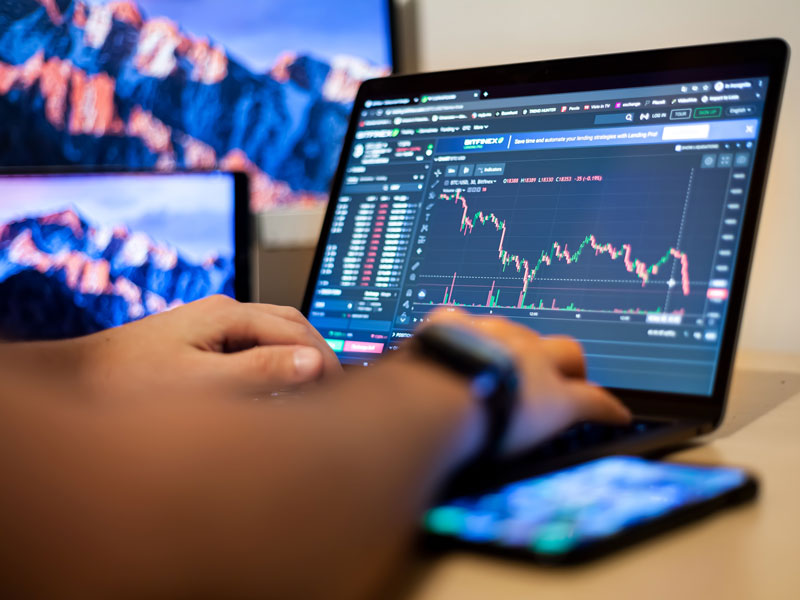
Many forex brokers offer demo accounts that allow you to practice trading with virtual money. This is an excellent way for beginners to refine their strategies without the risk of losing real money. Use this opportunity to familiarize yourself with the trading platform, test various strategies, and understand market movements.
3. Learn Technical Analysis
Technical analysis involves evaluating price movements and patterns on charts to forecast future price behavior. Here are some essential technical tools and concepts to consider as you develop your skills:
- Charts: Understand the different types of charts (line, bar, candlestick) and how to read them effectively.
- Trends: Identify market trends—uptrends, downtrends, and sideways trends—using trendlines or moving averages.
- Indicators: Incorporate indicators such as Relative Strength Index (RSI), Moving Average Convergence Divergence (MACD), and Bollinger Bands to enhance your decision-making.
4. Emphasize Risk Management
Effective risk management is quintessential for maintaining your capital and ensuring sustainable trading. Here are core principles to follow:
- Stop-Loss Orders: Use stop-loss orders to limit potential losses by automatically closing a position when it hits a certain price level.
- Position Sizing: Adjust your position size based on your account balance and the risk per trade, as discussed earlier. This minimizes the risk of large losses.
- Diversification: Avoid putting all your funds into one trade or market. Spread your investments across different currency pairs to mitigate risks.

5. Keep an Eye on Economic News
The forex market is heavily influenced by economic events and news releases. Understanding how these factors affect currency values is imperative. Some economic indicators to monitor include:
- Interest Rates: Changes in interest rates can have significant effects on currency values. Typically, higher interest rates attract more foreign capital, leading to currency appreciation.
- Employment Reports: Employment data, such as non-farm payroll figures, can be indicators of economic strength or weakness.
- Inflation Rates: Inflation levels can impact central bank policies and, consequently, currency values.
6. Use a Trading Journal
Maintaining a trading journal can be a powerful tool for self-assessment and improvement. Document each trade you make, including details such as entry and exit points, reasoning behind the trade, emotional state, and the outcome. Reviewing your journal regularly will help you identify patterns, mistakes, and opportunities for growth.
7. Stay Informed and Keep Learning
The forex market is constantly evolving, and continuous education is key to maintaining a competitive edge. Utilize various resources such as books, webinars, online courses, and forex forums to expand your knowledge. Learning about advanced strategies, market analysis, and trading psychology will help you become a more sophisticated trader.
Conclusion
Embarking on a journey in forex trading can be both exciting and challenging for beginners. By implementing the above strategies, you can establish a strong foundation and gradually enhance your skills. Remember, patience and perseverance are crucial in trading, and not every trade will be profitable. Stay disciplined, adhere to your trading plan, and continuously seek knowledge to increase your chances of success in the forex market.